NASA’s Curiosity rover successfully drills into Martian rock and makes unexpected discovery inside
A recent drilling campaign on the Red Planet has yielded a surprising scientific find that could reshape our understanding of the Martian environment.
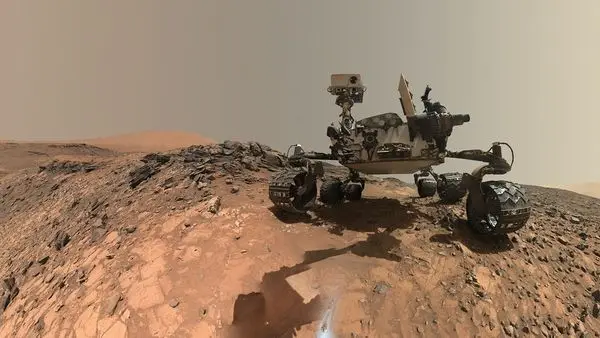

Mars drilling. Curiosity drilled its 49th hole into a rock target named Nazca to extract possible crystal samples.
Who chose it. A team led by The Open University’s Susanne P. Schwenzer picked the rock for its disc-shaped features.
What’s next. The CheMin instrument will show whether the structures are salt deposits.
NASA’s Curiosity rover has completed its 49th drilling operation at a target called Nazca, extracting material from inside a rock that appears to be packed with four or more distinct crystal formations.
The mission team, led by planetary mineralogist Susanne P. Schwenzer of The Open University, selected the block because of its unusual disc-shaped features.

According to Around Prague, the rover had previously spotted similar inclusions in the region, which scientists think may be crystals.

The drilling took place between Sols 5050 and 5055, with the team confirming the rock was stable through pre-drilling tests before extending the robotic arm.
Researchers are now analyzing the sample to work out whether these structures are salt deposits or another type of mineral, which could provide vital clues about past water activity on Mars.

Analyzing Martian geology
Curiosity used its onboard instruments, including APXS, MAHLI and ChemCam, to examine the rock before and after drilling.

Once the hole was made, the rover delivered the powdered sample to its internal CheMin instrument for a detailed analysis.
The team also fired the ChemCam laser at nearby dark pebbles, such as one named Palpala, to see whether they share a common origin with the drilled material.

Scientists are particularly interested in these pebbles because they vary widely in composition, offering a wider look at the area’s geological history.

What the crystals could reveal
If the structures turn out to be salt deposits, they would point to water once moving through the rock and evaporating away.
That kind of evidence helps scientists piece together how long liquid water lasted on Mars, and whether conditions were ever suitable for life.

The results from CheMin will show what the crystals are actually made of, which is the next step in the analysis.