Canadian astronaut on the International Space Station shows what happens if you wring a towel out in space
Being an astronaut living in space comes with some pretty unusual challenges, because something as simple as wringing a towel out on the International Space Station is quite difficult.
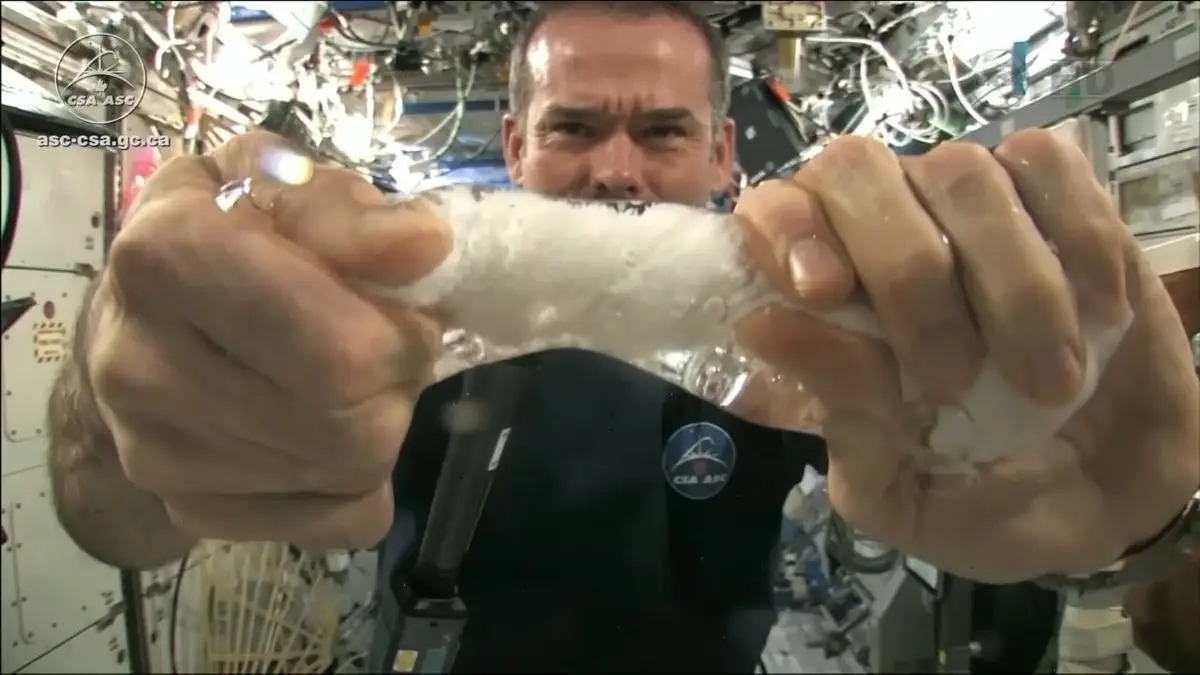

Canadian astronaut Chris Hadfield demonstrated what happens when you wring out a soaking-wet towel aboard the International Space Station (ISS), revealing why water behaves so differently without gravity.
The experiment might look simple, but the results are fascinating to see.
And the best part is that Hadfield didn’t need any fancy equipment to show it off.
Chris Hadfield wrings out a towel in space
Canadian astronaut Chris Hadfield started by showing off one of the washcloths used aboard the International Space Station, which comes compressed into a tiny, hockey-puck-shaped package to save precious storage space.
After opening it up, he soaked the cloth using a pouch of drinking water before getting ready to wring it out.
On Earth, most people would expect the water to drip straight down as they squeezed the towel.

But in space, things work a little differently.
As Hadfield twisted the wet cloth, water squeezed out and spread across his hands instead of falling away, and even more surprisingly, when he carefully let go of the cloth, the water continued clinging to his skin.
It almost looked like he had covered his hands in a layer of clear gel.

The science behind water behaving strangely in space
The reason for this unusual effect comes down to surface tension, which helps water molecules stick together and form a cohesive mass.
On Earth, gravity pulls water downwards, causing it to drip off your hands or run out of a wet towel, but in the microgravity environment aboard the ISS, that familiar downward pull is largely absent.
Instead, surface tension becomes much more noticeable, helping the water cling to Hadfield’s skin and follow the surface of the cloth.

Rather than splashing onto the floor, the water stayed together and moved around his hands.
Hadfield even joked that the water made a wonderful moisturizer.
The experiment also showed that the wet washcloth didn’t simply unravel and fall away, instead, it floated in place, looking a little like a soaking-wet dog chew toy.

Everyday life on the International Space Station is full of surprises
The demonstration is a reminder that living aboard the ISS means rethinking everyday activities that people on Earth rarely give a second thought.
Water doesn’t behave in the familiar way, which affects everything from personal hygiene to drinking and cleaning.

Astronauts must use specially designed equipment and carefully manage liquids to stop them from floating freely around the spacecraft; even something like going to sleep involves a physics lesson.
The idea came from two people named Meredith and Kendra, whom Hadfield congratulated at the end of the demonstration.
And while wringing out a towel might not sound like the most exciting experiment, watching water cling to an astronaut’s hands without a single drop falling away makes something we do every day without thinking pretty cool.