Scientists create the world’s first floating titanium with impressive 3D-printing technology
Researchers 3D-printed a hollow titanium lattice, filled it with foam, and it floated for months.
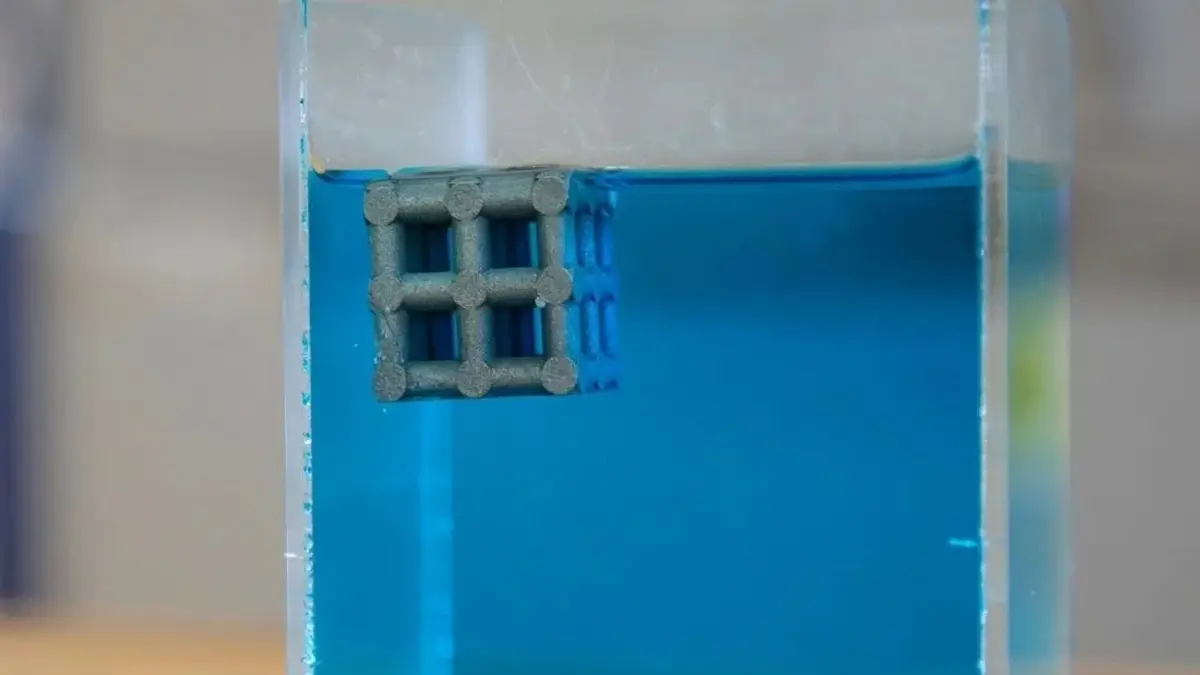

Titanium is famous for being incredibly strong and lightweight compared with many other metals and remarkably resistant to corrosion, but there is one thing it definitely isn’t good at: floating.
Now, scientists have found a clever way around that problem using 3D-printing, hollow structures and a little bit of foam.
Researchers at Australia’s RMIT University have created a titanium structure that can stay afloat even after suffering serious damage.
And scientists have a very specific purpose in mind for the creation.
This titanium is full of tiny surprises
The secret to this futuristic science experiment isn’t changing titanium itself, but changing the way it’s built.
The researchers used a titanium alloy called Ti-6Al-4V and 3D-printed it into a lattice made up of a network of hollow beams, and the beams had walls just 0.2 millimeters thick, with tiny internal channels running through them.
The idea actually came from lead researcher Dr Jordan Noronha’s PhD work, which looked at using hollow lattice structures to reduce weight without sacrificing strength.
“The idea grew from my PhD research,” Noronha told Tech SB.
These kinds of structures have already been explored for aerospace, biomedicine, automotive engineering and robotics, but there was one big problem when it came to using them in the water: they sank.
The team then came up with a clever solution.
“The lattices’ continuous internal channels could hold a second, lightweight material,” Noronha explained.
The team then pumped expandable polyurethane foam into those channels.
As the foam expanded, it filled the inside of the titanium beams while leaving the large spaces between them completely open.
The result was essentially a super-strong titanium skeleton with foam-filled struts, rather than a solid block of metal.
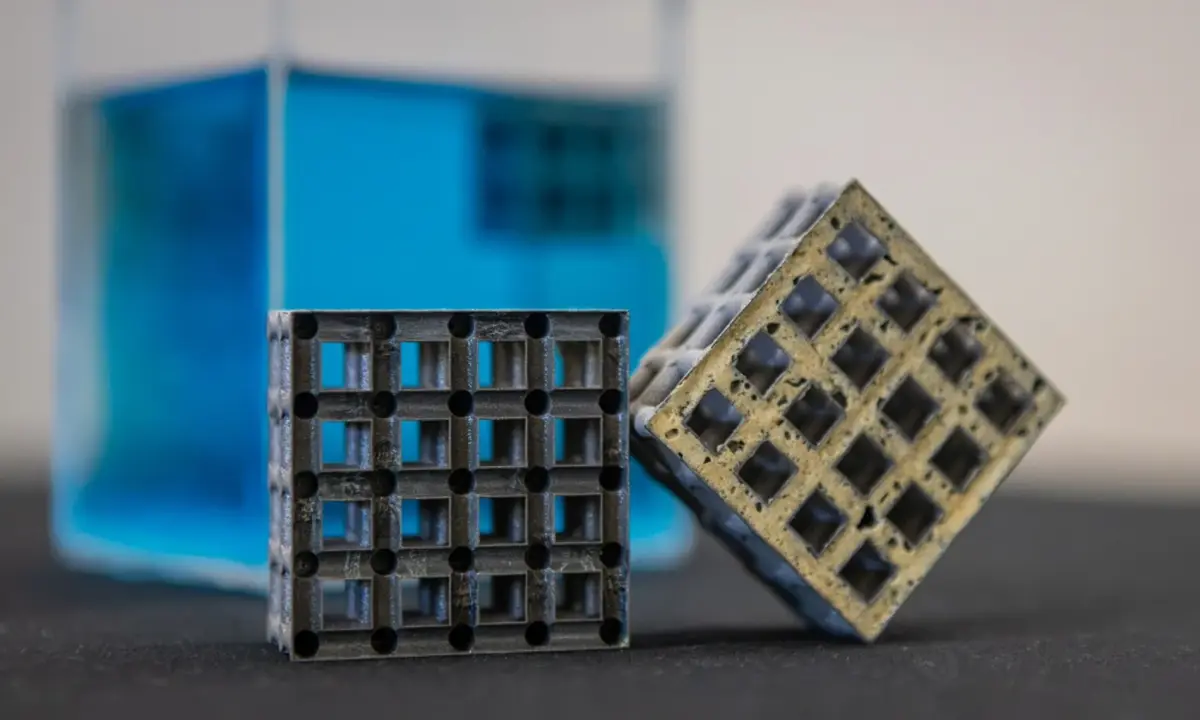
That matters because solid titanium is much denser than water.
The particular titanium alloy used by the researchers has a density of around 4.43 grams per cubic centimeter, compared with roughly 1 gram per cubic centimeter for freshwater.
So, naturally, a solid chunk of it isn’t going to win any swimming competitions.
“Titanium on its own does sink,” Noronha said.
The 3D-printed design gets around the problem by using very little metal while creating a much larger structure.
The foam also contains tiny closed cells that trap gas, helping the material to remain buoyant while the titanium framework provides the strength.
In other words, the researchers didn’t make titanium itself float - they made a titanium structure that is clever enough to float.
It can keep floating even when damaged
The first big test was pretty simple: put the thing in water and see what happens.
“The decisive moment came during our first immersion tests,” Noronha said.
The unfilled titanium lattices sank, just as expected, but the foam-filled versions rose to the surface and stayed there, and they didn’t just float for a few seconds before giving up.
“Seeing the samples continue to float overnight confirmed that the concept was viable,” Noronha said.
Perhaps the most impressive part came when the researchers started trying to break it.
The foam-filled structures were tested in freshwater for more than two months, and the team also subjected them to progressively more damage.

Even after cracks appeared, connection points fractured, and an entire layer of the lattice broke away, the structures continued to float.
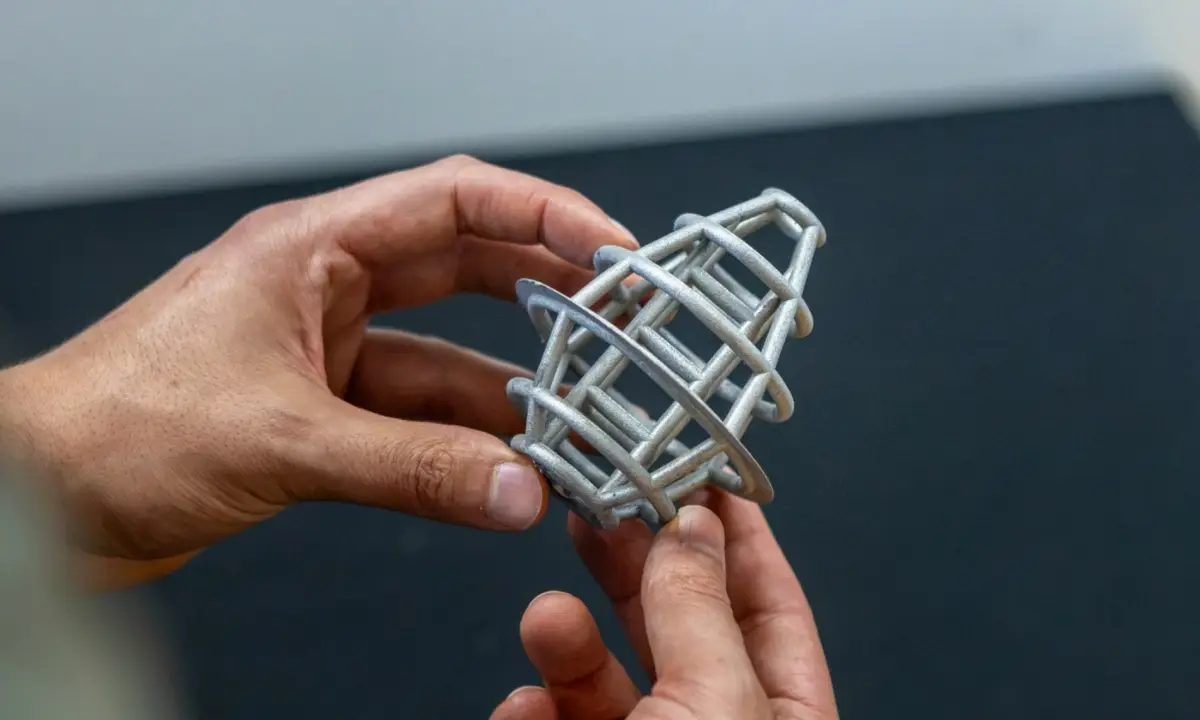
The researchers eventually turned the idea into a small marine buoy measuring around 100 millimeters tall and 85 millimeters wide.
The 3D-printed buoy successfully floated in natural seawater while turbulent water repeatedly rotated it by up to 45 degrees, and it did all this without needing a sealed outer shell, protective coating, or separate flotation material.

That could make the technology particularly interesting for things such as buoys, floating sensors and offshore equipment, where materials need to be strong, buoyant, and capable of surviving harsh marine environments.
That could be a pretty big deal for marine technology, where keeping things both strong and lightweight is often the name of the game.
“The hybrid lattice can carry substantially greater loads than conventional marine materials,” Noronha said.
And the team thinks this strange floating metal could eventually become much more than a laboratory curiosity.
“The skeletal-density principle is not tied to a particular component size,” Noronha explained.
They also believe the hollow titanium framework could be paired with different fillers to give it other useful properties, including stopping vibrations, absorbing energy, and managing thermal materials.
This titanium sure floats our boat!