Developer reveals the hardest part of redesigning each app for the iPhone Duo as millions need to be changed
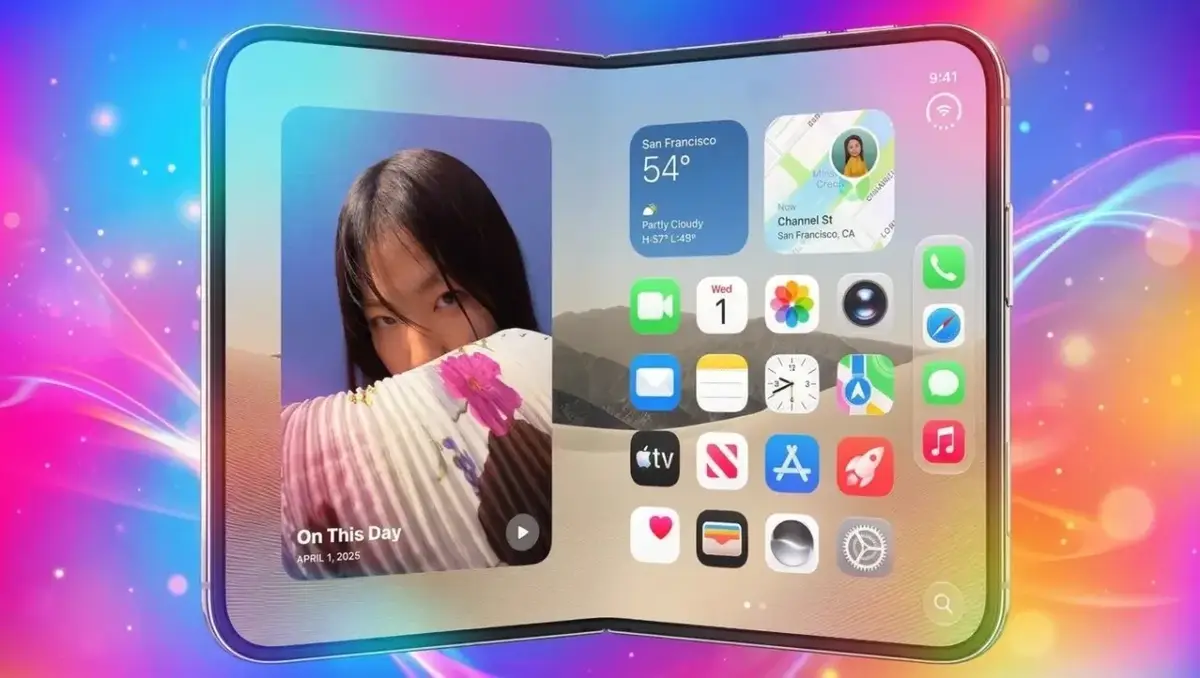
While there was plenty of excitement about the iPhone Duo hitting the shelves, customers also noticed a few potential issues.
Lack of FaceID was something people weren’t happy with, but there was also an obvious issue with app optimization.
There are currently 100,000+ apps available for the iPhone Duo, but that’s still a fraction of the overall catalog that’s available for the ‘regular’ iPhone.
We had a chat with Filippo Lacagnina, a software developer, to find out more about what third-party software architects will have to do.
Lacagnina has built several iOS and Android apps, including Il Filo, a personal project he developed specifically for the Duo. The app brings together calendar appointments, notes, to-do lists and more in one place.

What was the biggest challenge in adapting an app for a foldable device?
“The trickiest part is deciding how to use the extra space that opens up when you unfold the device. Simply scaling up the UI isn’t enough - you have to figure out which pieces of information make sense side-by-side and which ones need to maintain their own visual hierarchy,” he told Supercar Blondie Tech.
“With the iPhone Duo, there’s also the transition between different configurations while the user is actively using the app.
“Opening or closing the device changes the available screen real estate, and that shouldn’t interrupt what you’re doing or force you to lose your place.”
Lacagnina then revealed that the second biggest challenge is the control layout.
Il Filo@ilfilo.appReel Il weekend dura due giorni. Organizzarlo inizia molto prima. 🏍️ Il giro da scegliere, l’hotel da prenotare, quella sosta da non dimenticare. Poi arriva un cambio di programma e devi ritrovare…
View on Instagram ↗
“On the iPhone Duo, navigation shifts to the side, changing the balance between controls and content. You have to account for that in how the screens are laid out and where actions are placed.
“The real challenge is making all of these elements work together: taking advantage of the unfolded screen,keeping the closed experience comfortable, and making the transition between the two feel seamless.”
What did you think would be easier, and what turned out to be harder?
Let’s start with the good news.
According to Lacagnina, reusing existing screens was much easier than he feared.
“I expected it to be much harder to reuse existing screens,” he said.
“Having already worked on adapting the app for different form factors gave me a solid foundation. It didn’t eliminate the need for foldable-specific work, of course, but it allowed me to start with components that were already built to adapt.”
But then came the hard part.
“I thought the easiest part would be adjusting the layout once I had more screen space, [but] in reality, having more room means making better design choices,” he revealed.
“It means deciding which content to place side-by-side, how wide the columns should be, and how to keep controls within easy reach. An interface can fit the screen perfectly and still feel awkward to use.”

Do you think foldables are the future, or will they remain a niche?
The million-dollar question that everyone is asking: are foldables the future, or is it always going to be a relatively niche market.
“I think they can carve out a stable spot in the market, though I don’t believe they necessarily need to replace every traditional smartphone to make sense,” Lacagnina said.
“For certain tasks, the advantage is tangible: being able to view a calendar alongside appointment details, or reading a document while taking notes, cuts down on constant app-switching.
“[But] for other uses, a standard smartphone is still more than enough.
“As a developer, a lot will also depend on the apps themselves. If unfolding the device just gives you a blown-up version of the same screen, the benefit is limited.
“However, if that extra space actually lets you get things done more comfortably, the form factor gains real value.”
At the end of the day, how mainstream they become will ultimately come down to price, practicality, and personal preference.