Japan discovered a metal that could drastically change the world during a $107,000,000,000 mission
Japan has made a discovery that could help reshape the future of clean energy, electric cars, and some of the world’s most advanced technology.
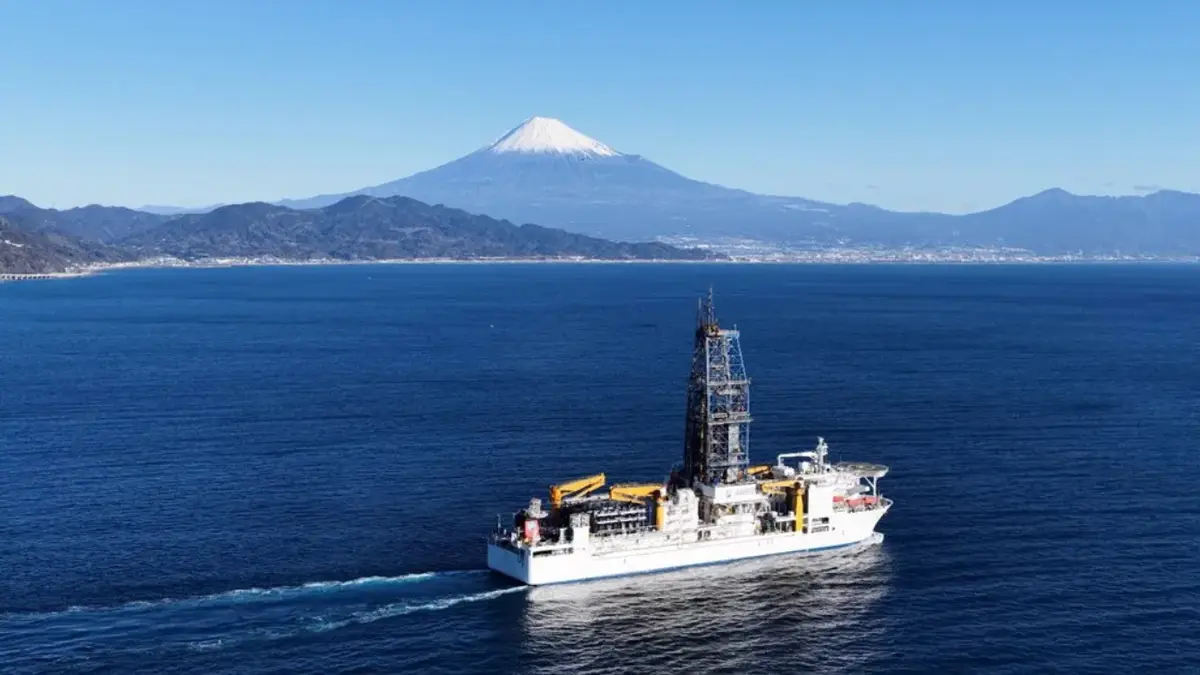

Investment. Japan’s $107 billion hydrogen strategy aims to help build a cleaner energy future.
Ocean depth. Rare-earth-rich mud has been recovered from around 6,000 meters beneath the Pacific Ocean.
Hydrogen boost. Researchers are exploring manganese-based materials that could increase hydrogen production by up to 1,000 percent.
Scientists have been investigating valuable minerals hidden deep beneath the Pacific Ocean, while the country pours billions of dollars into developing hydrogen as a cleaner energy source.
One of the most interesting breakthroughs involves manganese, a metal that could help make hydrogen production more efficient and less reliant on expensive materials.
And it comes as Japan looks to secure the resources it needs to reach its goal of net-zero emissions by 2050.
Japan’s discovery could help change the future of clean energy
Japan has been exploring ways to make hydrogen a bigger part of its future energy mix, with the country committing more than $107 billion to its hydrogen strategy.
Hydrogen can be used to generate electricity and power certain vehicles, with water being the main byproduct when it is used in a fuel cell.
However, producing hydrogen efficiently and affordably remains a major challenge, and that is where manganese comes in.

Researchers at Japan’s RIKEN Institute have investigated ways to modify the metal’s structure so it can be used in proton exchange membrane (PEM) electrolysers, which use electricity to split water into hydrogen and oxygen.
The research could offer an alternative to expensive metals such as platinum and iridium, which are commonly used in these systems.
According to a report by UNILAD, the approach could increase hydrogen production by up to 1,000 percent compared with the materials used in earlier systems.
If the technology can be developed at scale, it could help make hydrogen production more affordable and support the wider transition towards cleaner energy.
The Pacific Ocean is hiding a huge supply of valuable metals
Manganese is not the only reason Japan is looking towards the ocean floor.
Researchers have also identified vast deposits of metal-rich nodules and rare-earth-bearing sediment around Minamitorishima, a remote Japanese island in the Pacific Ocean.
Some deposits lie around 5,700 meters (about 18,700 feet) beneath the surface, making them extremely difficult to access.
The manganese nodules contain valuable materials, including cobalt, nickel and copper, which are important for industrial applications and battery production.

More recently, Japan has successfully recovered rare-earth-rich mud from depths of around 6,000 meters near the same island.
An analysis announced in July 2026 found that medium and heavy rare earth elements made up around 54 percent of the rare-earth content in the recovered material.
These elements have applications in electric vehicle motors, wind turbines, semiconductors and other advanced technologies.
The discovery could prove particularly important as Japan attempts to reduce its reliance on China, which dominates the global supply of many rare earths.
However, scientists still need to establish how economically viable large-scale extraction and processing would be.

Could Japan’s discoveries help power a greener future?
Japan’s efforts reflect a wider challenge facing countries trying to move away from fossil fuels: finding enough of the materials needed to build cleaner technologies.
From electric vehicle batteries to renewable energy systems, modern technology depends on access to minerals that can be difficult or expensive to source.
Developing more efficient hydrogen production could help reduce the cost of one potential low-carbon energy source, while securing domestic supplies of critical minerals could make Japan’s industries less vulnerable to international supply disruptions.

There are still significant hurdles to overcome, particularly the cost of deep-sea extraction and the need to assess its potential environmental impact.
Japan plans a larger trial of rare-earth-rich mud extraction in February 2027, with the results expected to help determine whether commercial production is feasible.
For now, the discoveries offer a promising glimpse of how scientific innovation and previously inaccessible resources could contribute to the next generation of clean energy and technology.