Man living with ALS uses Neuralink brain-computer interface to communicate using his thoughts and his own recreated natural voice
Losing the ability to speak can take away more than just someone’s voice, especially for this man with ALS who was given the chance to try Neuralink.
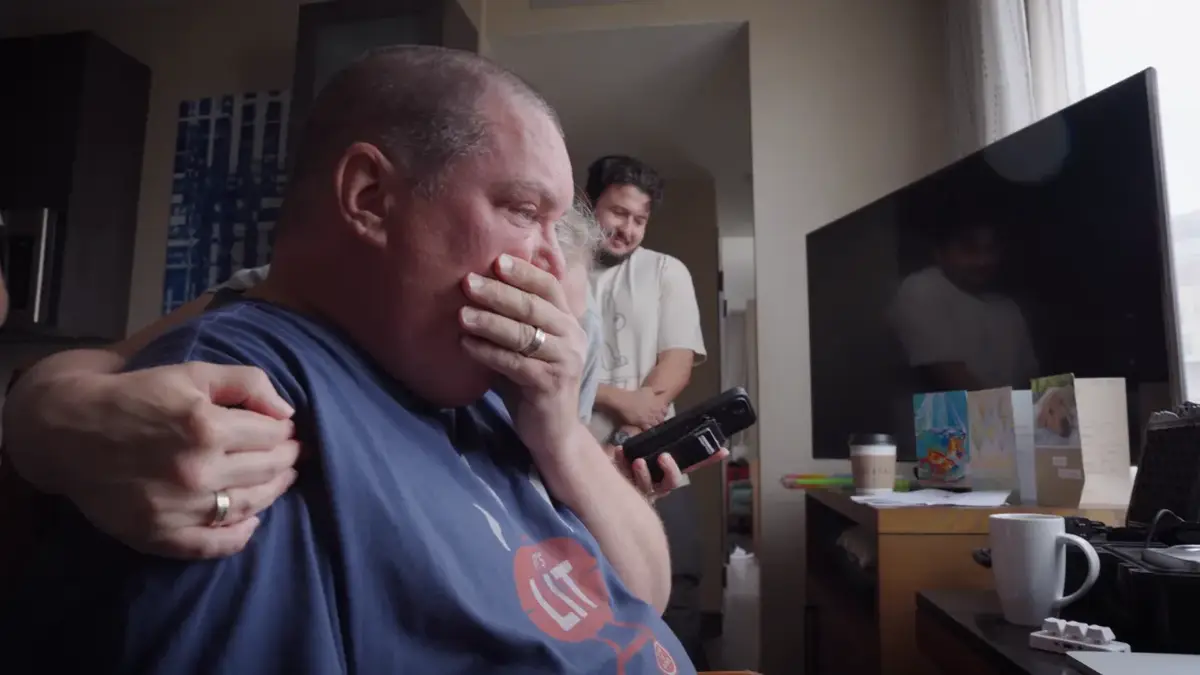

Diagnosis. Terry was diagnosed with bulbar-onset ALS in 2024.
Implant. His Neuralink device has around 3,000 channels monitoring brain activity.
Voice. He can communicate by thinking words and hearing them in his own recreated voice.
The Elon Musk-backed company is working on technology that could help people with conditions such as ALS communicate using nothing more than their thoughts.
One participant in its VOICE trial has already demonstrated how the brain-computer interface can turn his intended words into spoken sentences.
And the results are particularly emotional because the technology allows him to hear those words in a recreation of his own natural voice.
Terry’s ALS diagnosis left him struggling to communicate with his loved ones
Terry was diagnosed with bulbar-onset amyotrophic lateral sclerosis (ALS) in 2024.
This form of the progressive neurological condition affects the muscles involved in speaking and swallowing. Thanks to Neuralink, his outlook for communication is brighter.
Although he can still move his mouth and body, his speech has deteriorated to the point where even his loved ones sometimes struggle to understand what he is saying.
Before his diagnosis, Terry was an outgoing person who loved talking to people and had recently made partner at his company; he also loved chatting away to his beloved wife.

However, his condition eventually made communicating with clients and colleagues increasingly difficult, forcing him to take long-term disability and retire from a career he was enjoying.
His wife explained in Neuralink’s video that one of her biggest fears was losing the ability to understand what Terry needed and communicate with him instinctively.
The couple eventually decided to take part in Neuralink’s VOICE trial, with Terry becoming its third participant.

Neuralink is teaching a brain implant to turn thoughts into speech
The VOICE trial is designed to help fine-tune a brain-to-voice interface that could eventually help Terry and other people who have lost the ability to speak.
To get the technology working, researchers first connected to his Neuralink implant and examined the electrical signals it was producing.
The implant has around 3,000 channels that allow researchers to monitor neural activity in real time.

Because it was implanted in the speech motor region of his brain, the team could see changes in those signals when Terry attempted to speak.
He initially trained the algorithm by mimicking speech as best he could, with researchers collecting data to build a decoder that could translate his brain signals into the words he wanted to say.
The next step was even more impressive.

Rather than relying on physical attempts to speak, Terry could simply think about the words he wanted to communicate and hear them spoken through computer speakers.
The system used a recreation of his own natural voice, making the experience even more personal, and it’s not the first time Neuralink has changed a life.
During the demonstration, he successfully communicated sentences including “Hello, how are you doing today?” and “Do you have more information about that?”
Terry says Neuralink has given him back his voice
For Terry, the results have been life-changing.
He described the technology as a ‘total game changer’ and said Neuralink had given him back his voice.
His wife was equally emotional about what the breakthrough could mean for their relationship, explaining that being able to have a normal conversation with her husband again meant the world to her.

One particularly touching moment came towards the end of the demonstration, when Terry showed how he could think of words and watch them appear on screen.
He then communicated three simple words: “I love you.”

The couple’s reaction showed just how much something many people take for granted can mean to someone whose speech has been affected by ALS.
Neuralink is now inviting more people to get involved in helping shape the future of assistive technology through its research.
For Terry, the technology represents the chance to get back to something he once did every day without thinking about it: having a conversation.
And stories like his make everything worth it.
A short history of Neuralink:
- 2016
Founded: Elon Musk co-founded Neuralink.
- 2019
First reveal: Neuralink unveiled its brain implant technology.
- 2020
Pig demonstration: The company showed its implant recording brain activity in a pig.
- 2021
Monkey plays Pong: A monkey controlled a video game using its thoughts.
- 2024
First human implant: The first person received a Neuralink brain implant.
- 2025
Speech breakthrough: Neuralink received FDA Breakthrough Device Designation for its speech technology.
- 2026
Voice restoration: Terry demonstrated how the implant could turn his thoughts into spoken words using his recreated voice.