Crew from NASA’s simulated Mars mission emerges after 378 days in isolation and reveal what it was really like
Four volunteers have finally stepped back into the real world after spending more than a year pretending they were living on Mars.
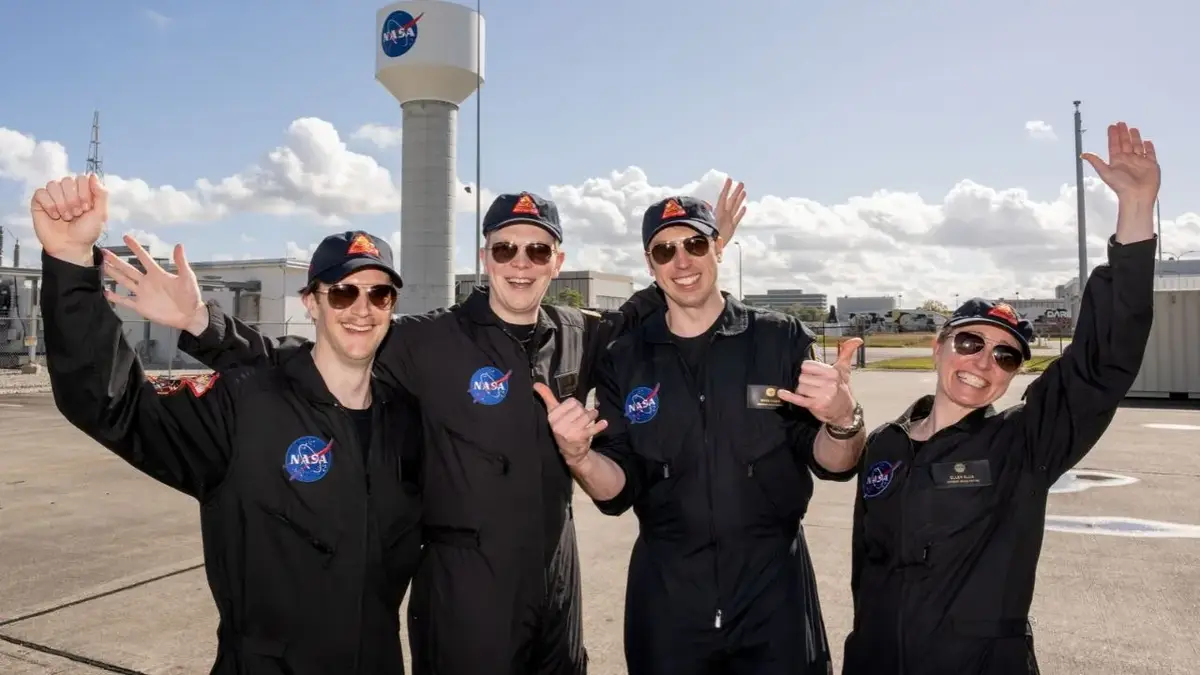

Isolation. The four CHAPEA volunteers spent 378 days inside a simulated Mars habitat without stepping outside into the real world.
Blackout. The crew experienced a two-week communications blackout to prepare for the possibility of losing contact with Earth.
Practice. NASA used the experiment to study how isolation, limited resources, and teamwork could affect astronauts on future Mars missions.
The NASA experiment was designed to recreate the challenges astronauts could face during a real mission to the Red Planet, from communication delays to limited resources.
The crew had to grow their own food, carry out experiments, and live together inside a specially designed habitat without access to the outside world.
They even started their own band.
Now that they’re back after 378 days, they’ve revealed what life was really like during their year pretending to live on Mars.
Four volunteers spent 378 days pretending to live on Mars
The crew members were part of NASA’s Crew Health and Performance Exploration Analog (CHAPEA) Mission 2, an experiment designed to help scientists understand what happens when humans are sent on long-duration space missions far from Earth.
Commander Ross Elder, medical officer Ellen Ellis, science officer Matthew Montgomery, and flight engineer James Spicer entered their specially designed habitat on October 19, 2025, and finally emerged on October 31, 2026.
Their home for the experiment was a 1,700-square-foot, 3D-printed facility called Mars Dune Alpha, located at NASA’s Johnson Space Center in Houston, Texas.

While they weren’t actually on Mars, NASA designed the experiment to recreate some of the challenges astronauts could face on the Red Planet, including isolation, limited resources, equipment maintenance, and delayed communications.
The crew had to grow crops, conduct scientific experiments, exercise, and carry out simulated spacewalks while living together in their enclosed environment.
And their connection with Earth was deliberately restricted, with messages to and from loved ones subject to delays of up to 45 minutes each way to mimic the time it takes for communications to travel between the planets.

The crew experienced a two-week communication blackout
One of the biggest challenges was being cut off from the outside world, and the experiment included a particularly demanding period when the crew went two full weeks without communicating with anyone outside their habitat.
This simulated a potential communications blackout that could happen during a real Mars mission, such as when the Sun gets between Earth and the Red Planet.
The experience also meant the crew couldn’t simply pick up the phone whenever they wanted to speak to friends or family.

Apparently, flight engineer James Spicer received more than 4,000 emails during the mission, giving him a way to stay connected despite the communication restrictions.
The crew also had to accept that life on Earth was continuing without them.
During their time inside, astronauts traveled farther into space than ever before during the Artemis II mission, while major events unfolded back home.
Spicer and his crewmates could only learn about these developments through the limited information they received.
The experience highlighted how important patience, independence, and teamwork could be for astronauts who may spend years away from Earth.

NASA wanted to find out how humans cope with life on Mars
The experiment wasn’t simply about seeing whether four people could live together in a small space for more than a year.
NASA collected health and performance data throughout the mission to understand how isolation, confinement, limited food supplies, and communication delays could affect astronauts physically and psychologically.
The crew also had to manage their own habitat, grow plants, carry out maintenance tasks, and complete simulated missions outside their living quarters.

These activities were designed to give scientists a better understanding of the equipment, routines, and support systems future astronauts will need.
The information could also help NASA prepare for its planned lunar exploration missions, where astronauts will face some of the same challenges of living and working far from home.
The agency hopes the findings will help it develop better ways to protect astronauts’ health, maintain their performance, and keep crews productive during extended missions.

The volunteers have finally returned to the real world
After 378 days behind closed doors, the four volunteers were finally able to step outside their simulated Martian habitat and reunite with their families.
NASA marked the end of the experiment on October 31, with the crew making their first appearance outside the facility in more than a year.
Speaking after emerging, commander Ross Elder said the experience had helped demonstrate that sending humans to Mars was an achievable goal.
He said: “The goal of putting humans on Mars is not only achievable, but rather inevitable.”
Flight engineer James Spicer said: We’re extremely excited to get outside and experience the sunlight for the first time in over a year.
“And alternatively, depending on the forecast, we’re excited to get outside and experience a torrential downpour for the first time in over a year.”

However, their work isn’t quite finished yet.
The crew will undergo around two weeks of medical evaluations and debriefings, allowing NASA researchers to examine the effects of the experiment and hear more about their experiences.
Their findings will be added to the knowledge gathered from the first CHAPEA mission, which ended in July 2024, helping NASA understand what it will take to keep humans healthy and safe during future journeys to the Red Planet.
A short history of Mars missions
- 1965
NASA’s Mariner 4 becomes the first spacecraft to successfully fly past Mars and sends back the first close-up images.
- 1976
Viking 1 and Viking 2 become the first successful US missions to land on Mars.
- 1997
Mars Pathfinder lands on the planet and deploys Sojourner, the first successful Mars rover.
- 2004
NASA’s Spirit and Opportunity rovers land on Mars to investigate its surface.
- 2012
Curiosity lands in Gale Crater to investigate whether Mars could once have supported microbial life.
- 2021
Perseverance lands on Mars alongside Ingenuity, the first helicopter to fly on another planet.
- 2026
NASA’s CHAPEA Mission 2 crew emerges after 378 days living inside a simulated Mars habitat on Earth.