Observatory discovers new dwarf planet candidate like Pluto and scientists explain how it hid from them
Astronomers have spotted a potentially massive new world hiding beyond Neptune, and it could join Pluto as a recognized dwarf planet.
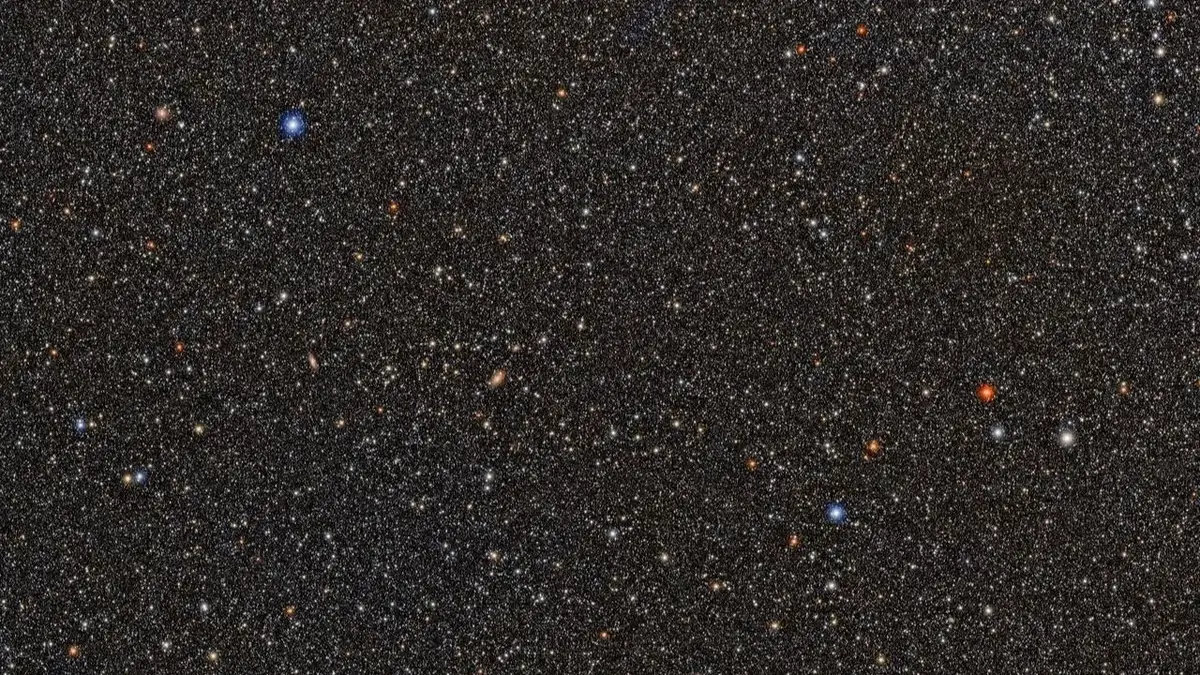

Location. 2026 ED138 is located in the Kuiper Belt, beyond Neptune.
Size. Scientists estimate it could be between 370 and 930 miles wide.
Discovery. The object appeared in images dating back to 2016 but went unnoticed because of its crowded star-filled surroundings.
Astronomers have discovered a mysterious object lurking in the outer reaches of our solar system that could become the newest officially recognized dwarf planet.
The icy object, named 2026 ED138, was spotted using the powerful Vera C. Rubin Observatory in Chile, and early estimates suggest it could be hundreds of miles wide.
Despite potentially being one of the largest objects of its kind, it managed to escape detection for years.
Scientists have now explained why this distant world remained hidden and how new telescope technology finally helped them spot it.
How big is the planet?
The newly identified object, provisionally named 2026 ED138, sits in the Kuiper Belt, a distant region of icy bodies beyond Neptune in space.
It orbits approximately 46 times farther from the Sun than Earth, putting it even farther out than Pluto, which orbits at an average distance of around 40 times Earth’s distance from the Sun.
Scientists estimate that 2026 ED138 could measure between 370 and 930 miles (600 and 1,500 kilometers) across.

That would potentially make it larger than Ceres, the smallest of the five dwarf planets currently recognized by the International Astronomical Union.
The discovery was made by astrophysicist Matthew Holman, who used a computer program developed with colleague Kevin Napier to analyze data collected by the Vera C. Rubin Observatory.
After spotting the object in October 2026, Holman reportedly reacted with ‘excited disbelief’ because objects this large are extremely rare.
If its size and shape are confirmed, it could become the sixth officially recognized dwarf planet, joining Pluto, Ceres, Eris, Haumea, and Makemake.

Scientists explain how the mysterious object stayed hidden
Despite its impressive size, 2026 ED138 had been hiding in plain sight for years.
One major reason is its position in the sky, because the object sits close to the plane of the Milky Way, where millions of stars create an incredibly crowded background.
This makes it difficult for astronomers to distinguish relatively faint moving objects from the surrounding stars.
Its location in the southern hemisphere also made it harder for some observatories to spot.

However, the Rubin Observatory’s ability to repeatedly scan huge areas of the sky helped scientists identify its movement among the background stars.
The team also went back through older astronomical images and discovered that the object had actually appeared in observations dating back to 2016.
The researchers used archival images from the Dark Energy Camera in Chile, alongside around 30 detections made by Rubin between March and July 2026, to piece together its orbital path.
This technique is known as precovery, where scientists find earlier observations of an object after it has already been identified.

Scientists still need to confirm its dwarf planet status
Although 2026 ED138 looks promising, astronomers cannot officially call it a dwarf planet just yet.
To qualify, an object needs to orbit the Sun, have enough gravity to pull itself into an approximately round shape, and not have cleared its orbital neighborhood of other objects.
Scientists currently have an estimated size based on its brightness and distance, but they need more detailed observations to establish its physical characteristics.

Further observations using infrared light could help determine its actual size and whether it meets the requirements.
The discovery is particularly exciting because the Vera C. Rubin Observatory is only getting started with its decade-long survey of the southern sky.
Researchers expect its repeated observations to uncover many more objects that have previously gone unnoticed.
If 2026 ED138 has been hiding among the stars for this long, scientists could have plenty more surprises waiting in our own cosmic backyard.
A short history of dwarf planets
- 1801
Ceres is discovered and initially classified as a planet.
- 1930
Pluto is discovered and becomes the ninth planet.
- 2005
Eris is discovered, sparking debate about what counts as a planet.
- 2006
The International Astronomical Union officially introduces the dwarf planet classification.
- 2008
Haumea and Makemake are recognized as dwarf planets.
- 2026
Scientists discover 2026 ED138, a new potential dwarf planet beyond Neptune.